How integrated automation can increase production, reduce labour costs, and make better use of shop floor space.
When an architectural panel shop hits a production bottleneck, the conversation usually turns to another CNC machine. The table is full, you are falling behind, and buying another machine feels like the only honest answer. But what if the problem is not your machining capacity? What if it is the way material moves through the shop?
I spend most of my time on shop floors with fabricators, and I see the same pattern. The second horizontal CNC is often the expensive way to solve a loading problem. Before you invest in another machine, more people, and more floor space, it is worth asking one question. Are you investing in greater productivity, or duplicating an inefficient process?
At AutoFab Solutions in Alberta, we are an authorized Muratori Machines partner, and we help cladding and architectural panel shops across North America. The work cell I want to talk about is the Ranger 6321 with the ALU Loader. The Ranger 6321 has a process area of 6.3 meters by 2.1 meters. On a vertical Ranger, adding automatic loading and unloading can change the math quickly. Labour requirements can fall once the loader is in the cell, though the timing depends on the work and the configuration.
The payoff shows up in the crew
A lot of automation talk starts with cycle time. On the floor, the first number I watch is how many people it takes to keep one machine fed.
On a traditional horizontal router, loading is the job. Someone has to pick a panel, get it onto the table, square it, clamp it, and get clear before the spindle moves. Unloading is the same work in reverse. If that person is also watching the program, the spindle spends a surprising part of the day waiting.
Add automatic loading and unloading to a vertical machine and that wait can shrink quickly. Productivity benefits can begin immediately, because the crew is no longer the only way to keep the table fed.
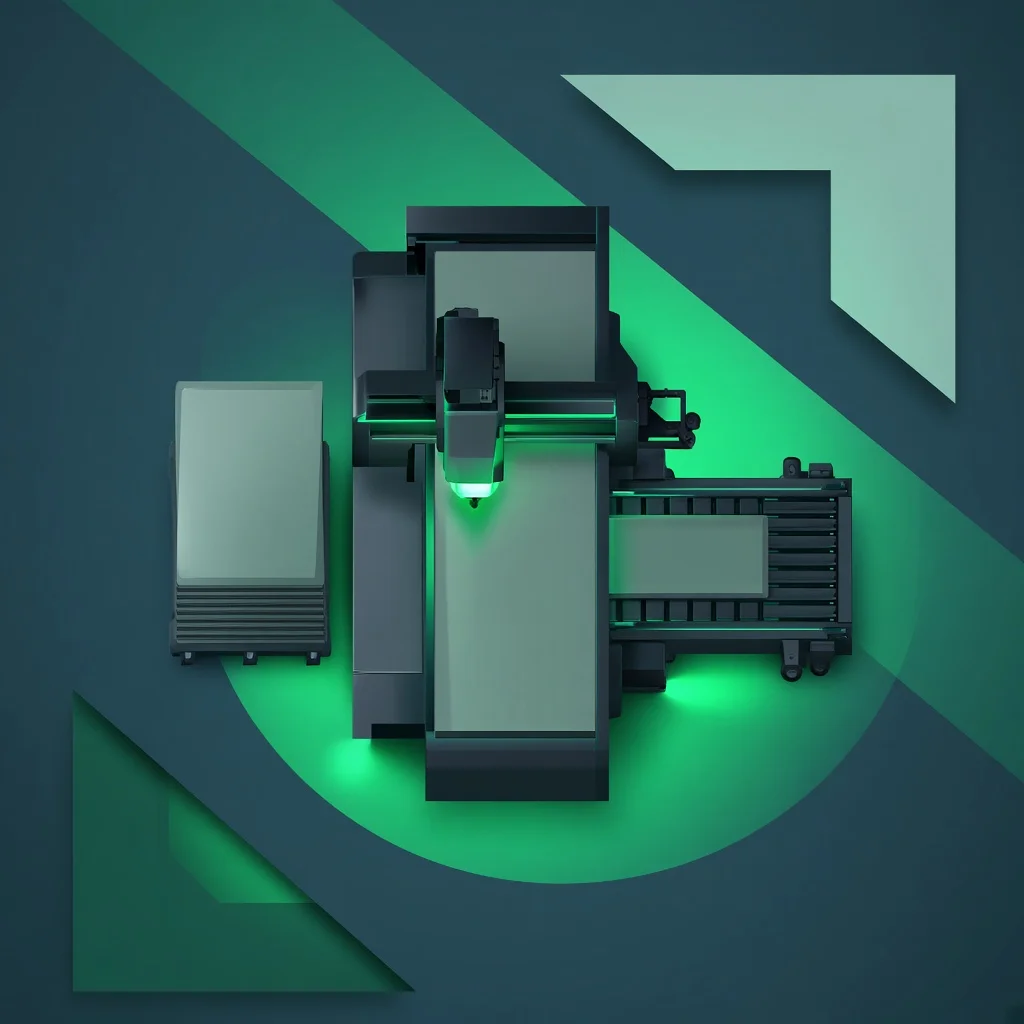
That is the point of the ALU Loader on a Ranger. It is a patented automatic panel loading and positioning system. Lifting arms with suction cups connect to the vacuum system of the Ranger CNC. The loader picks aluminium or composite panels from pallets and positions them on a surface equal in height and inclination to the Ranger worktable. A single operator can control the Loader from the Ranger CNC control panel, without standing at the stack. While one panel is being cut, the next can be prepared. Pallets sit in the loading area, which means less manual handling and less damage to stock.
One Machine. One Operator. More Than Double the Output.
I have a shop based in Southern California that was running two traditional horizontal CNC machines. Once the Ranger with the automatic loader was installed, that work cell with just one Ranger machine was able to more than double the daily throughput, with only one employee in that work cell, compared to three in the work cell with their existing setup with two horizontal CNC machines.
Two horizontal machines. Three people in that cell. Then one Ranger with the automatic loader, one employee, and more than double the daily throughput. That is one third the operators and half the machines. Capacity is not just spindles. It is spindles plus the people required to feed them, plus the floor those machines occupy, plus the power and the handling that come with each new table.
The mistake I hear before the first call
Here is what fabricators most often get wrong about floor space and automation.
With a traditional horizontal machine, as soon as you hit a production bottleneck, the usual option is to purchase a second machine. That second machine is a significant investment. It needs another high-voltage connection. It needs a significant amount of floor space. You will also need to increase your labour requirements to operate and manually load the new second machine. So the fix adds capital, power, square footage, and people. You bought a twin of the bottleneck.
With a Ranger that is not yet equipped with an auto loader, a similar bottleneck may be better solved by adding the loader, depending on the machine configuration. That can significantly increase daily production. The loader is a pneumatic system, so you are not adding another high-voltage hookup the way a second CNC would, though the exact utilities still depend on the shop. Labour requirements can go down rather than up.
If you already own the Ranger and the stack is still a manual job, this is the first lever I would look at, provided the machine can take the loader. Buy the second machine only after you have used the one you have.
The Economics of Vertical CNC Technology
The loader in this story sits on a vertical Ranger. RANGER is a panel router with a vertical table for high-speed panel cutting, drilling and milling. It is designed to process panels such as solid aluminium, ACM, HPL, fibre cement and plastic, used in architecture, industry, transport, interior design and visual communication.
Because they are vertical, Ranger CNCs take up 60 percent less space compared to a horizontal machining centre with the same worktable surface area. That is Muratori's published comparison for equivalent worktable area, not necessarily for a complete automated cell, and it is the figure I use when a fabricator is staring at a bay that cannot grow. The upright table is how the Ranger 6321 keeps a 6.3 meter by 2.1 meter process area without giving up the aisle, the staging, and room for the next step in the cell.
The vertical worktable, side guards and photoelectric cells support operator safety. Chips that are not extracted fall to the floor, leaving the table cleaner. Verticality plus loading and unloading automation is more ergonomic and reduces the risk of panels falling. A full-size aluminium or composite panel is awkward, especially near the end of a long shift. The loader picks it from the pallet and presents it at the same height and inclination as the worktable. The operator is not the lifting device.
Integrated loading and unloading is not a gadget on the side of the router. On this cell it is how the upright machine stays cutting, and how you stop solving a handling problem by buying another whole machine.
Before you make your next capital investment
If you are weighing a second horizontal CNC because the first one cannot keep up, or you already have a Ranger and the stack is still a manual job, talk to us before you commit the floor and the labour. We offer a complimentary production assessment of the bottleneck, the crew count, and the bay, and we will tell you whether this cell changes the math for your shop.
Contact AutoFab Solutions about a Ranger 6321 with ALU Loader, or about adding a loader to a Ranger you already have, where the configuration allows it. Call (403) 612-9941, email info@autofabsolutions.com, or visit autofabsolutions.com. We are based in Alberta and we work with fabricators across North America.
Smarter Fabrication. Greater Efficiency.